
Spring Tree Inspection: How to Spot Dangerous Trees Before Storm Season
Spring in Roanoke brings warmer days, heavier rain, and the kind of wind that can reveal problems hiding in your trees. A spring tree inspection helps you spot weak limbs, leaning trunks, decay, and storm damage before they turn into a bigger safety issue. For homeowners, it is one of the simplest ways to protect the roof, driveway, fence, vehicles, and outdoor spaces before storm season gets serious.
Not every dangerous tree looks obviously damaged from the ground. Some warning signs are easy to miss, especially when new leaves start covering cracked branches, hollow spots, or dead sections in the canopy. Taking time to look closely now can help you decide whether a tree needs trimming, monitoring, or professional removal before high winds create an emergency.
A Quick Look Now Can Prevent Bigger Storm Problems Later
A spring tree inspection is not about finding every possible issue on your own. It is about noticing the warning signs that deserve attention before wind, heavy rain, or saturated soil can make them more dangerous. A spring check gives homeowners a better chance to act early, especially before rough weather puts extra stress on weak trees.
Start Your Tree Inspection From a Safe Distance
Begin by standing far enough back to see the full shape of the tree from the ground to the highest branches. A safe tree inspection should start with the big picture, especially if you notice heavy limbs, a new lean, or branches hanging over the roof, driveway, fence, or outdoor seating area.
Walking under a damaged tree too quickly can put you too close to loose limbs or weak sections. Give yourself room to look at the canopy, trunk, and surrounding area first so you can spot obvious hazards before moving closer.
Check for Leaning Trees After Winter Weather
A leaning tree is not always an emergency, especially if it has grown that way for years and looks stable. Concern rises when the lean appears new, has worsened after winter storms, or is accompanied by cracked soil near the base. Wet spring ground can also make older root problems more visible because saturated soil gives weakened roots less support.
Look for changes around the trunk and root flare before assuming the tree is fine. A tree inspection should include checking whether the ground looks lifted, sunken, or disturbed on one side, especially after heavy rain or wind. When a tree leans toward a home, garage, road, or power line, it is safer to have it evaluated through a tree risk evaluation before storm season adds more pressure.
Look for Dead Branches During Your Tree Inspection
Dead branches are easier to spot in spring because healthy limbs usually start showing new buds or leaves. During your tree inspection, watch for bare, brittle, cracked, or darker limbs, especially if they hang over roofs, fences, vehicles, or walkways.
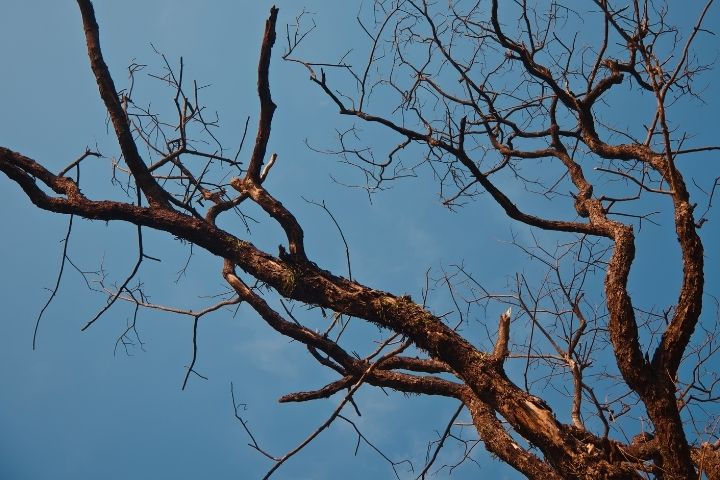
Use this quick check to narrow down which branches may need attention before stronger spring weather arrives:
Branches with no buds or leaves, while the rest of the tree is growing
Large limbs hanging over the roof, driveway, fence, or sidewalk
Broken branches caught in the canopy after winter weather
Dead limbs rubbing against healthy branches
Heavy branches that look cracked, sagging, or partly detached
Dead branches do not always mean the entire tree has to come down. In many cases, tree trimming and maintenance may be enough, but branches that are high, heavy, or close to structures should be handled by a professional before spring storms make the work more urgent.
Watch for Cracks, Splits, or Weak Spots in the Trunk
The trunk often tells you whether a tree has deeper structural problems. A tree inspection should include checking for long cracks, open splits, hollow areas, peeling bark, or dark, soft spots that may indicate decay inside the tree.
Pay close attention to cracks that run vertically through the trunk or appear where large limbs connect to the main stem. Trees with existing trunk damage can become more dangerous during spring storms because wind pushes against weak areas that may no longer support the tree well. If those warning signs appear with decay, serious lean, or large dead limbs, review when it may be time to remove a tree so you can act before the next storm raises the risk.
Include the Root Area in Your Tree Inspection
The base of the tree can reveal problems that branches alone will not show. During your tree inspection, look for raised soil, exposed roots, mushrooms near the trunk, soft ground, or gaps where the tree appears to be pulling away from the soil.
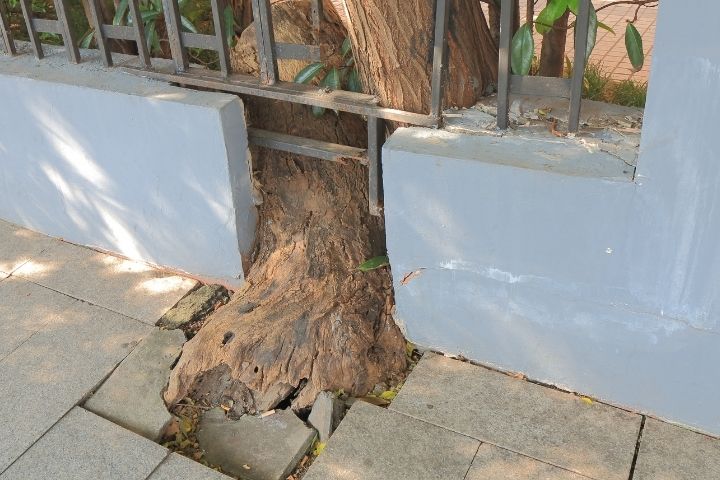
Root problems become more concerning when the tree is close to a house, driveway, retaining wall, or walkway. Heavy spring rain can soften the ground around weakened roots, making an already unstable tree more likely to shift during strong winds.
A tree with root damage may still grow green leaves, so do not rely on the canopy alone. If the ground around the base looks disturbed or the trunk seems to be lifting on one side, stop walking around the tree and keep people, pets, and vehicles away from that area until it can be checked.
Know When a Tree Inspection Needs a Professional
A homeowner can spot many early warning signs, but some tree problems are not safe to handle from the ground. A tree inspection needs professional help when you see large hanging limbs, trunk cracks, serious lean, root damage, or branches close to power lines.
The right equipment and training matter because tree removal and trimming can become dangerous once heavy limbs, hidden cracks, or nearby structures are involved. Even a branch that looks manageable may fall unpredictably if it is cracked, heavy, or tangled in the canopy after winter weather.
When a tree could damage your home, block access, or fall during the next storm, early action is safer than waiting for the problem to worsen. For unsafe trees, storm-damaged limbs, or concerns that need a closer look, schedule a tree inspection with Mark’s Tree Stump Removal before the next storm puts your property at risk.