
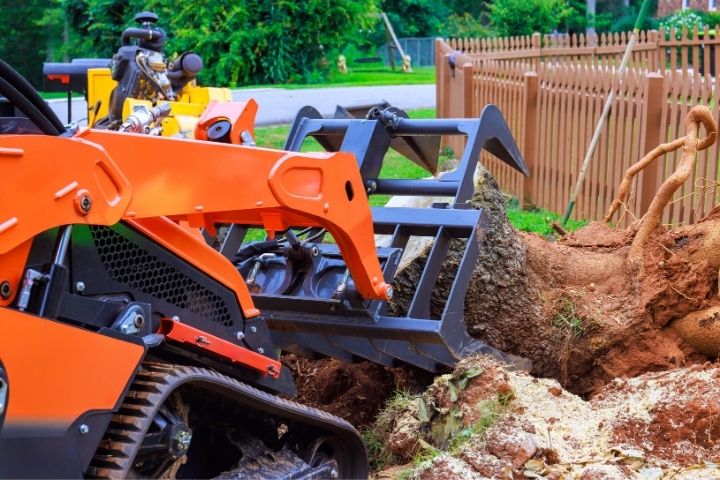
5 Signs a Tree on Your Property Is a Safety Risk
A tree can look strong from a distance and still be hiding problems that make it unsafe. Cracks, dead limbs, root damage, and sudden leaning can all point to a deeper issue, especially when the tree is close to your home, driveway, fence, or outdoor living space. For homeowners, recognizing these warning signs early can help prevent property damage and make it easier to plan for dangerous tree removal before the situation becomes urgent.
In the Roanoke area, changing weather, heavy rain, and older trees can all add pressure to weak spots that were already there. The goal is not to panic every time a branch falls or bark peels, but to know when a tree deserves a closer look. If several warning signs appear at once, the safest next step may be to call a professional before the problem becomes harder to control.
A Risky Tree Usually Gives Clues Before It Falls
A tree rarely becomes a safety concern overnight unless a storm, lightning strike, or sudden break is involved. Most unsafe trees show warning signs first, but those signs can be easy to overlook when the tree still has leaves or looks solid from one side. Knowing what to watch for helps you decide when a tree needs trimming, monitoring, or dangerous tree removal before it damages your property.
Not every tree problem means immediate removal, but certain warning signs should not be ignored. If one or more of these issues appear near your home, driveway, fence, or walkway, it is worth taking the risk seriously before the situation becomes harder to control.
1. Large Dead Branches Are Hanging Over Your Property
Dead branches are among the clearest signs that a tree may pose a safety risk. They may look dry, bare, cracked, or darker than the rest of the canopy, and they often stand out once nearby healthy branches begin filling in with leaves.
Location matters just as much as size. A dead limb hanging over a roof, driveway, patio, sidewalk, or parked vehicle can fall during wind or heavy rain, so it should be checked before it causes damage.
2. The Trunk Has Cracks, Splits, or Hollow Areas
A damaged trunk can indicate weakness within the tree, even when the outside still looks mostly stable. Deep cracks, open splits, hollow spots, peeling bark, or soft areas can all indicate that the tree is losing strength where it needs it most.
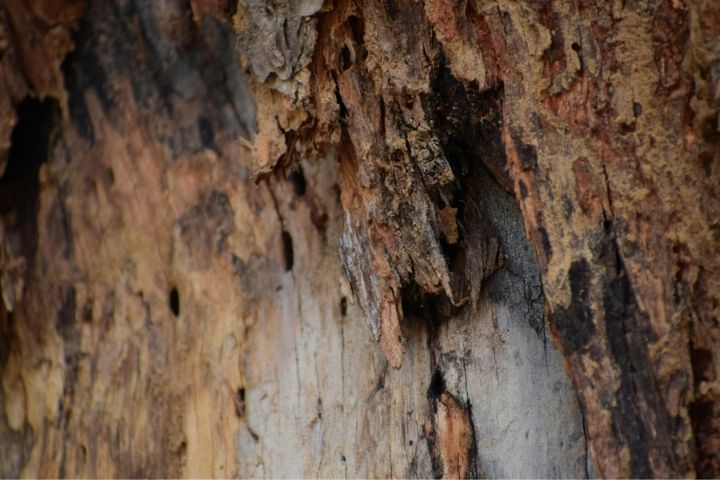
Damage near the base or where major limbs connect to the trunk deserves extra attention. If the weak area keeps spreading or shows dead branches above, review the signs that it may be time to remove the tree rather than waiting for it to fail on its own.
3. The Tree Has Started Leaning, or the Lean Has Gotten Worse
Some trees grow with a natural lean and remain stable for years. A new lean, a worsening lean, or a lean paired with cracked soil near the base can indicate a problem with root or trunk support.
Pay attention to where the tree would land if it failed. When a leaning tree points toward a home, garage, road, fence, or power line, the concern becomes property damage, blocked access, and personal safety.
4. Roots Are Lifting, Exposed, or Pulling Away From the Ground
A tree’s roots help anchor it, so visible changes around the base should always get your attention. Raised soil, exposed roots, gaps near the trunk, or one side of the root area pulling up can suggest that the tree is no longer holding as firmly as it should.
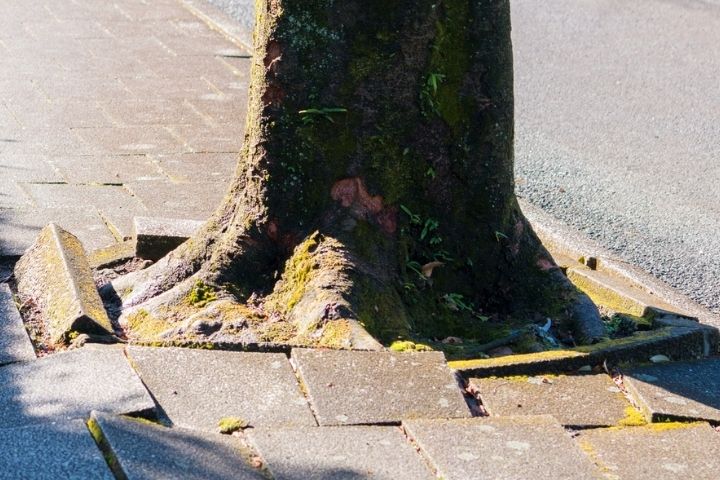
Root problems can be easy to miss because the canopy may still look green and full. When root movement appears near a driveway, walkway, foundation, or outdoor seating area, it can help to understand how hidden root problems can affect your yard before the tree shifts during bad weather.
5. Fungus, Soft Wood, or Decay Is Showing Near the Base
Fungus near the base of a tree can be a sign that decay is developing inside the wood or root system. Mushrooms, soft bark, hollow spots, sawdust-like material, or dark, damp areas around the trunk may indicate a weakness not visible higher in the canopy.
Decay becomes more concerning when it appears with other warning signs, such as dead limbs, cracks, or a worsening lean. A tree can keep standing for a while even when the inside is weakening, but once the base loses strength, the risk of failure can rise quickly.
Take Action Before Dangerous Tree Removal Becomes Urgent
A risky tree does not always give you much time once the damage becomes obvious. Large dead limbs, serious lean, trunk cracks, root movement, and decay near the base can all make the tree harder and more dangerous to handle later.
Professional help is important when the tree is close to your home, driveway, fence, road, or utility line, and the safest option may involve tree removal or trimming. A professional assessment can clarify the risk, explain whether trimming or removal is safer, and help you avoid waiting until the issue becomes harder to handle.
Concern about a risky tree deserves a clear answer before the damage spreads. Have Mark’s Tree Stump Removal take a closer look before the risk grows. Get clear guidance now so you can protect your home, yard, and outdoor spaces with confidence.